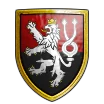
Bohemians
Ranked win rate
Measured from real ranked ladder matches — how Bohemians actually performs in play.
Strongest matchups
Bohemians wins most often against



Toughest matchups
Bohemians struggles most against





Head-to-head lookup
Bohemians's ranked 1v1 win rate against any specific opponent.
Pick a civilization for the exact head-to-head win rate.
See all Bohemians matchups, ranked best to worst →Civilization bonuses
- Mining Camp technologies free
- Blacksmiths and Universities cost -100 wood
- Spearman-line deals +25% bonus damage
- Fervor and Sanctity affect Villagers
- Chemistry and Hand Cannoneer available in Castle Age
- Wagenburg Tactics (Gunpowder Units move +15% faster)
- Hussite Reforms (Monks and Monastery technologies gold cost is replaced by food cost)
Team bonus
Markets work +80% faster
Unique unit
Unique technologies
Hussite Reforms
500 food, 450 gold · 45sResearch Hussite Reforms (Monks and Monastery technologies gold cost is replaced by food cost)
Wagenburg Tactics
300 food, 300 gold · 45sResearch Wagenburg Tactics (Gunpowder Units move +15% faster)
History
Bohemia’s rich history is one of both rapid change and tenacious resilience. Early-imperial Roman authors coined the region’s name after the local Boii, an ancient Celtic enemy of Rome. By the time that the Roman Empire began to fall into decay, Germanic-speaking confederations such as the Lombards and the Alemanni inhabited the region. As the Migration Period (4th-6th centuries AD) brought vast changes to Europe and its inhabitants, the Germanic groups moved on, leaving Bohemia open for a new wave of migrants.
These new arrivals were speakers of the West Slavic language-branch, the ancestors of the region’s modern inhabitants. Although these groups occasionally coalesced into small pseudo-states, such as that of Samo in the early 7th century, these were the exception rather than the rule. The most prevalent factors in this delayed process of state-building were probably issues posed by geographical features, continued migrations, and the threat posed by the Avar Khaganate, a confederation of predatory nomadic horsemen dwelling to the east in Pannonia.
As larger settlements developed and trade increased, Bohemia’s inhabitants interacted more frequently with their Frankish neighbors to the west. The resulting eastward spread of Christianity initially caused friction due to the pagan beliefs of many of the Slavic inhabitants of Bohemia, but as the new creed spread, a tenuous connection between the regions formed. This development soon bore fruit as, in the late 8th century, an alliance of Franks and Slavs thrust east and inflicted a catastrophic defeat on the Avars, driving them from the region.
The resulting power vacuum was soon filled by the rising empire of Great Moravia. Striving for legitimacy, its early rulers opened relations with the Byzantine Empire, inviting Orthodox missionaries into their lands. This brief trend was reversed under Svatopluk I (c. 840-894), who ascended to power by allying himself with the Franks and deposing his uncle Rastislav. A shrewd politician and able commander, Svatopluk used his reign to expand his empire from Moravia and Bohemia into Poland and Pannonia, eventually dying as he lived--in war.
Weakened by the squabbling of his successors and vulnerable to rebellion and invasion, Great Moravia did not long survive Svatopluk’s death. Around the turn of the 10th century, the Magyars irrupted into Pannonia and Moravia, bringing the fragile state to its knees. Desperate to protect themselves, the Premyslids, dukes of a new Christian dynasty ruling the region around Prague, placed themselves under the protection of their German neighbors to the west. This was the first in a series of policy decisions that would see Bohemia incorporated into the Holy Roman Empire.
Empowered by their western ally, the Premyslids undertook a series of campaigns to conquer Bohemia and build a new state. This ambition was set in rapid motion when Duke Boleslav I (c. 908-972) acquired Moravia after helping Otto the Great crush the Magyars at the Lechfeld in 955. For three centuries, the Premyslids ruled Bohemia, amassing vast amounts of wealth from bustling trade routes, bountiful mineral deposits that supported a strong currency, and successful warfare. Before long, the duchy grew to such strength that these magnates were gradually elevated to the status of kings.
One especially ambitious king, Ottokar II (1233-1278), known as “the Iron and Golden King” for his military might and wealth, aspired to become Holy Roman Emperor. Seeing opportunity in the instability created by the recent Mongol invasions of Central and Eastern Europe, he launched campaigns in all directions, expanding his domain to the shores of the Adriatic Sea and even crusading against the pagan Baltic Prussians. Fearing his growing power, Ottokar’s peers elected Rudolf of Habsburg Holy Roman Emperor instead and challenged the Bohemian behemoth. In a vicious showdown at the Marchfeld in 1278, Ottokar was defeated and slain.
After the fall of the Premyslid dynasty in 1306, rulership of Bohemia passed to the illustrious House of Luxembourg. Although able kings who propelled Bohemia into a brief golden age, their tenure on the throne is best known for being plagued by religious warfare. In 1415, the Holy Roman Emperor Sigismund ordered the execution of Jan Hus, a university scholar preaching religious reforms, sparking the Hussite Wars, a precursor to the Protestant Reformation. Against all odds, the Hussites prevailed against the Imperial forces and won religious freedom due to the tactical brilliance of ingenious leaders such as Jan Zizka and Prokop the Great, who used gunpowder weaponry, geography, and fortified wagons equipped with artillery to deadly effect. The Hussite movement began another Bohemian thrust towards autonomy, but the region gradually fell under the sphere of influence of its Polish, Hungarian, and Austrian neighbors. Following the death of Louis II in battle against the Ottoman Turks at Mohacs in 1526, Bohemia passed into the dominion of the Habsburgs, who would rule it for nearly four more centuries.
Tech tree
Bohemians can build 124 of 523 tech-tree optionsEvery unit, building and technology in the game — solid chips are what Bohemians can build and research, greyed-out and struck-through entries are what they can't. Hover any item for details.
Town Center

Dark Age
- Democracy
 Feudal Age
 Loom
Loom- Oligarchy
- Tyranny
 Villager
Feudal Age
 Castle Age
- Defensive Satrapy
- Economic Satrapy
- Military Satrapy
 Town Watch
 Wheelbarrow


Imperial Age

Barracks
Dark Age


Feudal Age



Castle Age
- Baggage Carriers
 Champi Warrior
 Eagle Warrior
 Fire Lancer
 Gambesons
- Guardsman
 Hoplite
 Long Swordsman
 Pikeman
 Squires
- Swordsman
Imperial Age


Archery Range
Dark Age
—
Feudal Age
 Archer
- Bowman
 Skirmisher
Castle Age


Imperial Age
 Arbalester
 Elite Elephant Archer
- Gastraphetoros
 Hand Cannoneer
 Heavy Cavalry Archer
 Parthian Tactics
- Recurve Bowman
Stable
Dark Age
—
Feudal Age


Castle Age


Imperial Age
 Cavalier
 Elite Battle Elephant
 Elite Steppe Lancer
- Elite War Chariot
 Heavy Camel Rider
 Heavy Hei Guang Cavalry
 Hussar
- Imperial Cavalry
 Paladin
- Raider
- Shock Cavalry
Siege Workshop
Dark Age
—
Feudal Age
—


Blacksmith


Monastery
Dark Age
—
Feudal Age
—
Castle Age
- Amulet Protection
- Apotropaic Magic
 Atonement
 Devotion
 Fervor
- Hemlock
 Herbal Medicine
 Heresy
 Monk
Monk- Priestess
 Redemption
- Sacrificial Dedication
 Sanctity
- Syncretism
Imperial Age
 Block Printing
- Exorcism
 Faith
Faith- Haruspicy
 Illumination
- Mystery Cults
- Purification
 Theocracy
University
Dark Age
—
Feudal Age
—
Castle Age


Imperial Age


Castle
Dark Age
—
Feudal Age
—
Castle Age
 Anarchy
- Andean Sling
- Atlatl
- Ballistas
- Bearded Axe
- Bimaristan
- Burgundian Vineyards
- Caciques
- Chatras
- Chieftains
- Cilician Fleet
- Circumnavigation
- Coiled Serpent Array
- Corvinian Army
- Detinets
 Dii Plunderers
- Eastern Settlement
- Ends of the World
- Eupseong
- First Crusade
- Fortified Bastions
- Grand Trunk Road
- Great Wall
- Greek Fire
 Helot Levies
- Herbalism
- Hill Forts
 Hussite Wagon
- Inquisition
- Iphicratean Tactics
- Ironclad
- Kamandaran
- Kasbah
- Kshatriyas
- Lamellar Armor
- Leaf-Headed Shafts
- Malon
- Manipur Cavalry
- Marauders
- Medical Corps
- Nomads
- Obsidian Arrows
- Odomantian Raiders
- Paiks
 Petard
- Red Cliff Tactics
- Reed Arrows
- Royal Heirs
- Silk Armor
- Silk Road
- Sipahi
- Sparabaras
- Steppe Husbandry
- Stirrups
- Stronghold
- Svan Towers
- Szlachta Privileges
- Taxiarchs
- Thalassocracy
- Tigui
- Tuntian
- Tusk Swords
- Vadhavadha
- Veteran Chiliarchs
- Xyphos
- Yasama
- Yeomen
Imperial Age
 Arquebus
- Artillery
- Atheism
- Aznauri Cavalry
- Bagains
 Bessian Metalworking
- Bogsveigar
- Bolt Magazine
- Butalmapu
- Chivalry
- Citadels
- Comitatenses
 Conscription
- Cotton Armors
- Counterweights
- Crenellations
- Cuman Mercenaries
- Curare
 Delian League
- Double Crossbow
- Drill
- Druzhina
- Eisphora
 Elite Hussite Wagon
- Fabric Shields
- Farimba
- Fereters
- Flemish Revolution
- Forced Levy
- Frontier Guards
- Furor Celtica
- Garland Wars
- Hauberk
 Hoardings
- Howdah
- Hussite Reforms
- Karda
- Kataparuto
- Krypteia
- Lechitic Legacy
- Logistica
- Maghrebi Camels
- Mahayana
- Ming-Kuang Armor
- Ordo Cavalry
- Palintonon (Packed)
- Paper Money
- Peloponnesian League
- Peltasts
- Perfusion
- Pezhetairoi
- Pirotechnia
- Recurve Bow
- Rocketry
 Sappers
- Sarissophoroi
- Scythed Chariots
- Shatagni
- Shinkichon
- Sitting Tiger
- Skandhavaras
 Spies/Treason
- Supremacy
- Thunderclap Bombs
- Timurid Siegecraft
- Torsion Engines
- Tower Shields
 Trebuchet (Packed)
- Vedic Teachings
- Warwolf
- Wootz Steel
Dock
Dark Age


Feudal Age


Castle Age


Shipyard
Dark Age
—
Feudal Age


Mill
Dark Age
—
Feudal Age


Castle Age


Imperial Age


Lumber Camp


Mining Camp
Dark Age
—
Feudal Age


Castle Age


Imperial Age
—
Market


Port
Dark Age

Feudal Age


Castle Age

Imperial Age